 Industrial Warehouse Tent Manufacturer | Sinrida-Tent
How to Choose the Right Portable Livestock Shelter for Your Farm
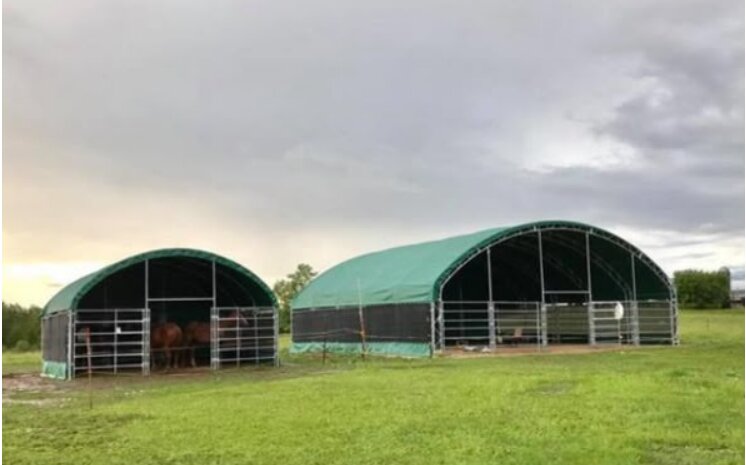
Picking the right livestock shelter is one of those decisions that quietly shapes everything else on a farm. Get it right, and your animals stay calmer, healthier, and more productive through every season. Get it wrong, and you're left patching a structure that never really fit the job in the first place.
A good livestock shelter does more than block rain. It gives animals a place to rest away from wind and direct sun, and it gives you, the farmer or rancher, a more manageable daily routine. Feeding, checking on herd health, and moving animals around all get easier when there's a dependable covered space to work from.
In this guide, we'll walk through why the right shelter matters, what to look for before you buy, the advantages of choosing a mobile-friendly livestock shelter, and how to spot genuine quality when browsing a portable livestock shelter for sale. By the end, you'll have a clear picture of what fits your operation, and what a dependable cattle shelter for livestock should actually deliver day to day.
Why Choosing the Right Livestock Shelter Matters
Animals that spend long hours exposed to harsh sun, driving rain, or cold wind tend to show it: lower feed efficiency, more stress, and in some cases, real health setbacks. A properly built portable livestock shelter reduces that exposure and helps herds stay steadier through changing weather.
There's also a practical side for the farm itself. A well-placed shelter for livestock cuts down on mud buildup around feeding areas, keeps hay and equipment drier nearby, and makes daily chores less of a battle against the elements. Choosing the right structure now saves money on repairs, replacements, and vet visits later, which is really the whole point of investing in one to begin with.
It also matters at the herd level. Cattle and horses that have consistent access to shade and cover tend to eat more steadily and show fewer signs of heat stress during the summer months. A reliable livestock shelter basically takes out weather as a variable in managing your herd day to day because then you can concentrate on feeding, breeding and overall health rather than worrying about what the weather will do to you.
Key Factors to Consider Before Buying

Not every shelter suits every farm. Before you commit to a purchase, it helps to think through a handful of practical details that will affect how well the structure performs over time.
Type of Livestock
Cattle, horses, sheep, and goats don't all need the same setup. Horses tend to need a bit more headroom and open sightlines, while cattle do fine with a slightly more enclosed, wind-blocking design. Smaller livestock like sheep and goats often need lower entry points and tighter spacing to feel secure. Matching the shelter type to the animals you actually raise makes a noticeable difference in how much they use it.
Shelter Size
Undersized shelters get crowded fast, and crowding leads to stress, competition at feeding time, and sometimes injury. A good rule is to plan for growth, not just your current headcount. Popular sizes like 6m x 6m x 3.7m suit small to mid-sized operations while larger dual-truss designs around 12m x 12m x 5m handle bigger herds comfortably. Always leave a bit of breathing room for movement and future expansion.
Material and Durability
The frame and cover material decide how long your shelter actually lasts. Steel pipe construction along with heavy-duty PVC covering in the 610 g weight range stands up to sunlight, wind and the rigors of everyday farm life. The cheaper construction may be economical in the short run but may need replacement after a year or two, making it costlier in the long run.
Weather Resistance
Rain, snow and strong wind all put different kinds of stress on a structure. A dome-shaped roof sheds water and snow more efficiently than a flat design, and it also handles wind pressure better without flexing or tearing. If your region sees extreme seasonal swings, ask specifically about wind and snow load ratings before buying.
Portability
Farm needs change. Grazing patterns shift, feeding areas move, and sometimes a shelter just needs to go where the animals are that month. A portable livestock shelter gives you that flexibility without the cost of building something permanent, and it's often quicker to set up too.
Benefits of a Portable Livestock Shelter
A portable farm shelter solves a problem that fixed structures can't: farms rarely stay the same year to year. Rotational grazing, seasonal herd movement, and changing pasture conditions all call for shelter that can move with the operation rather than anchoring it in one spot.
Beyond flexibility, portable designs tend to install faster, which matters when you need cover in place before a weather change hits. Moreover, mobile shelters for livestock are more cost-effective when compared to permanent structures because there is no need for foundations.
When a farmer is dealing with several pastures or leased property, a portable livestock shelter system comes in handy because you do not have to worry about having enough coverage due to the relocation of the herd. It is an excellent compromise between tarps and a permanent structure.
What to Look for in a Portable Livestock Shelter for Sale
Browsing listings for a portable livestock shelter for sale can get overwhelming fast, especially with so many specs and price points floating around. A few things are worth checking closely before you commit.
The first is looking at the frame specifications including the arch tube thickness, spacing between supports and whether the frame is either a single truss or double truss. This gives you an idea of what amount of load and wind pressure the structure can support. Secondly, the fabric weight and material should be looked at; fabric below 610g PVC is not expected to last in extreme weather conditions. Thirdly, inquire about delivery times as manufacturing and delivery can take anything from 20 to 45 days.
Prices depend on size and specifications. A smaller 6m x 6m x 3.7m unit built using a single-truss design normally costs less, while a bigger one, 12.2m x 12.2m x 5m in size with a dual-truss design, designed to accommodate more animals, costs more. The difference between the two is how one evaluates the value for money.
A reliable shelter for livestock should also come with some form of warranty and clear after-sales support, so you're not left on your own if an issue comes up.
Why Choose Sinrida Tent for Your Livestock Shelter
Sinrida Tent has built livestock shelters around real farm conditions, not just catalog specs. Every structure uses a steel tube framework combined with heavy-duty PVC fabric, giving you dependable agricultural portable livestock shelter performance whether you're running a small hobby farm or a full commercial operation.
With over 20 years of metal processing and manufacturing background behind the company, and shelters already working on farms across Canada, Australia, New Zealand, Germany, and the United States, the production process has been refined through real-world use rather than guesswork.
Customization is part of the standard process here. Tell the team your dimensions, intended use, and site conditions, and they'll recommend a configuration that actually fits, not a one-size-fits-all box. Standard models ship in 20 to 30 days, with custom builds taking 30 to 45 days, and every shelter comes backed by a one-year warranty. For farms exploring reliable livestock housing solutions, that combination of build quality, customization, and support is hard to overlook.
If you're ready to protect your herd properly, reach out for a quote today. Share your farm's size, animal type, and location, and get a shelter recommendation built around your actual needs, not a generic template.
FAQs
1 . What is the best livestock shelter for a farm?
The best choice depends on your herd size, animal type, and local weather. Generally, a steel-framed structure with a durable PVC cover and dome roof offers the most reliable all-around protection for most farms.
2 . Why should you choose a portable livestock shelter?
A portable option lets you move the shelter to wherever your animals are grazing, which is especially useful for rotational grazing systems or farms managing multiple pasture sites. It also tends to cost less than permanent construction.
3 . What should you consider before buying a portable livestock shelter?
Think about the type of animals you're housing, the size needed for your current and future herd, frame and fabric durability, weather resistance, and whether you need the flexibility of a temporary livestock shelter or a fixed one.
4 . What features should a quality livestock shelter have?
Look for a strong steel tube frame, heavy-duty PVC fabric (610g or higher), a dome roof for water and snow runoff, and manufacturer support like a warranty.
5. How do you choose the right size shelter for your livestock?
Base your decision on current headcount plus room for growth. As a general guide, allow extra floor space per animal beyond the bare minimum so herds aren't crowded during feeding or bad weather.
6. Can a portable livestock shelter withstand harsh weather conditions?
Yes, when built with a proper steel frame and heavy-duty fabric cover, portable shelters handle wind, rain, and even snow loads effectively, despite being designed for mobility.
It reduces vet costs from weather-related stress, protects feed and equipment stored nearby, and typically lasts for years with minimal maintenance, which adds up to real savings over a basic open-pasture setup.